Monastery of Ardenica
Lushnjë
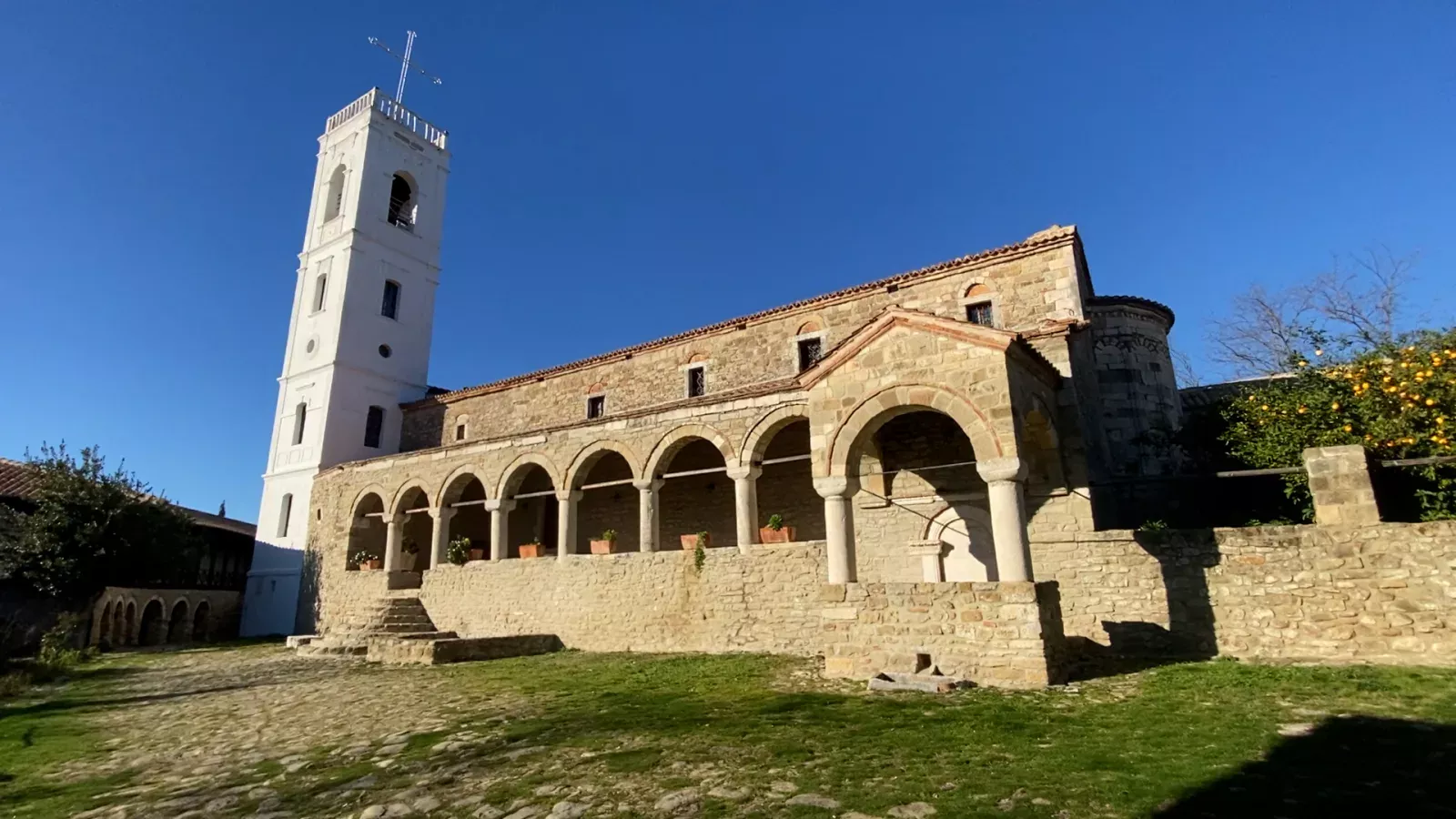
Monastery of Ardenica is one of Albania’s most important religious, historical, and cultural monuments. Situated atop a hill overlooking the village of Kolonjë and the fertile plain of Myzeqe, the monastery commands a panoramic view of the surrounding landscape.
Enclosed by high stone walls, the complex has served for centuries as a significant center of spiritual life, education, culture, and religious devotion.
Above the main entrance gate is the date 1 May 1477, traditionally regarded as the date of the monastery’s construction. The principal church is dedicated to the Nativity of the Holy Virgin Mary and celebrates its feast day on 8 September. The name Ardenica has been associated with the idea of a water source, while the renowned scholar Theofan Popa, in his work Inscriptions of the Churches of Albania, suggests that the name derives from a Greek word meaning “refreshing.” In Christian symbolism, the Virgin Mary refreshes and comforts the faithful through her intercession, delivering them from the burden of sin.
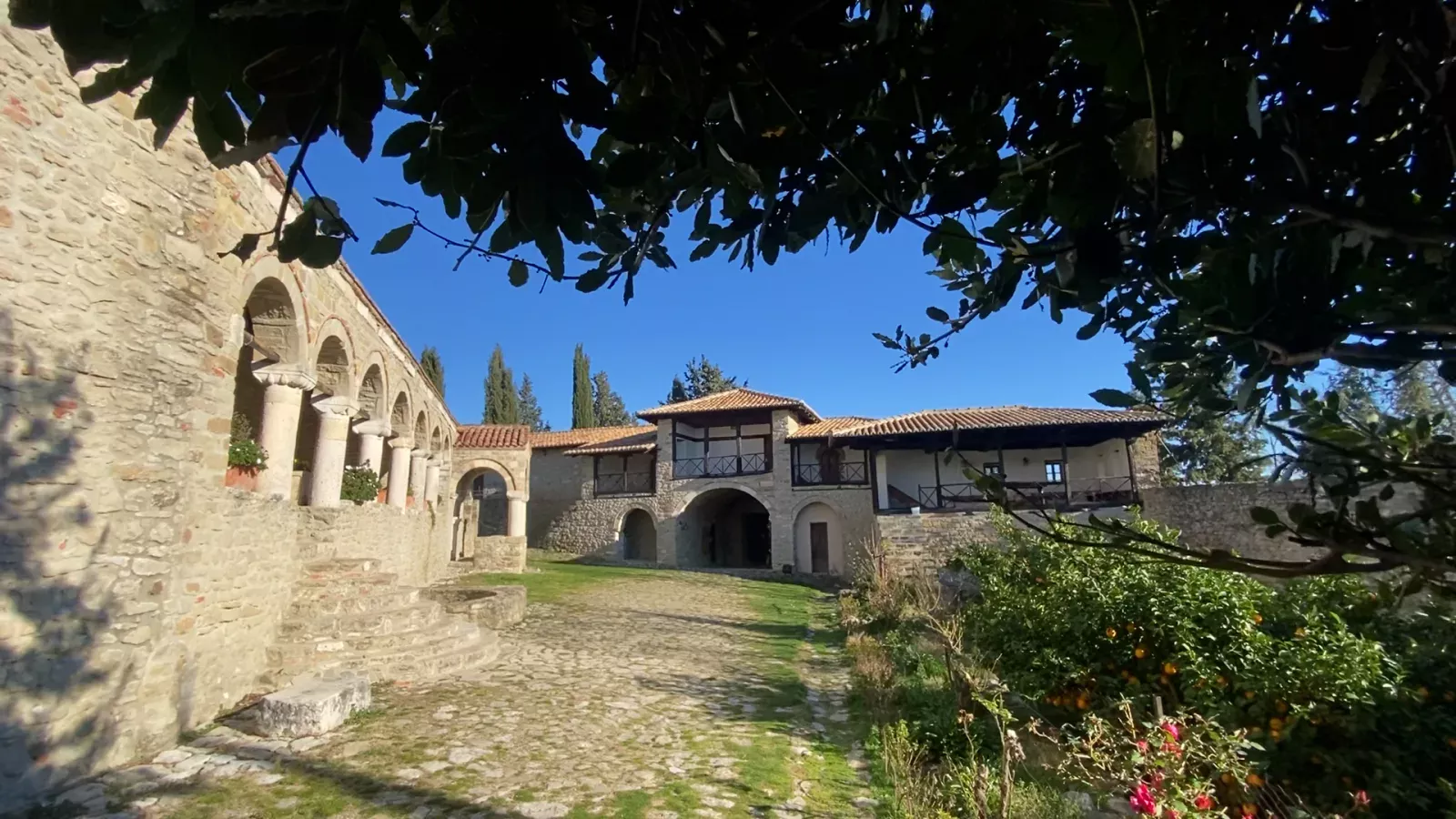
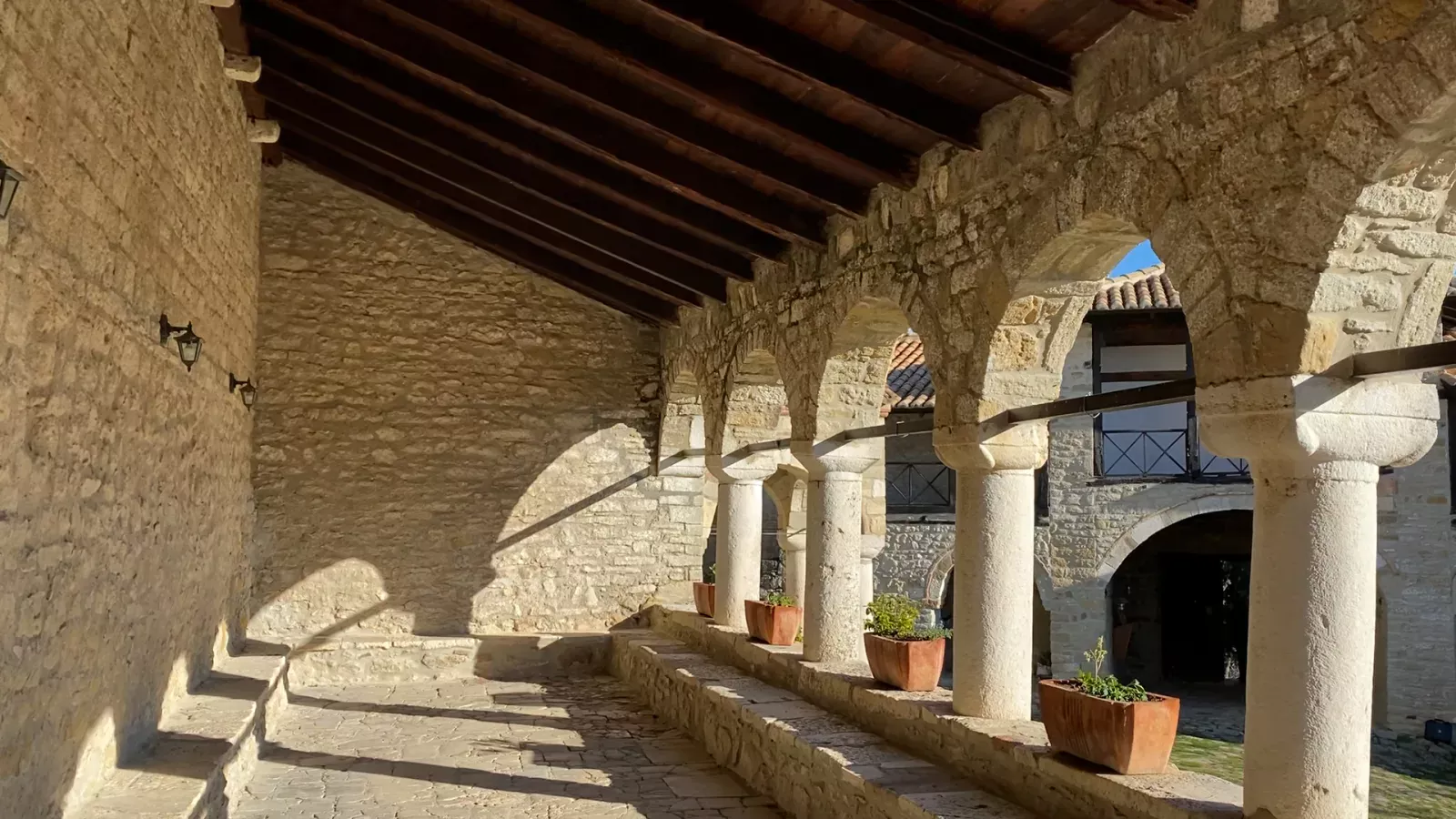
The monastery is entered through an arched gate on its eastern side, leading into a spacious cobblestone courtyard. The surrounding buildings form a harmonious architectural ensemble. Two-story galleries and living quarters once served as monastic cells, while the ground floors were used as granaries for storing agricultural produce. Within the complex there is also an olive oil mill, reflecting the monastery’s historical economic activity and self-sufficiency.
The origins of the monastery date back to the 10th century, when the small Church of the Holy Trinity was constructed. Measuring only 5.15 by 3.06 meters internally, this modest chapel represents the earliest surviving phase of the complex. During the 13th and 14th centuries, under the Despotate of Epirus, the site developed into a fully established monastery. The Church of the Nativity of the Theotokos (Mother of God) is believed to have originated during the 15th–16th centuries.
Throughout its history, the monastery underwent several periods of construction, destruction, and restoration. Historical evidence suggests that parts of the complex may have been damaged or destroyed toward the end of the 17th century. The appearance of the monastery as seen today largely reflects a major reconstruction undertaken during the 18th century, when the principal church, the Chapel of the Holy Trinity, and many of the surrounding buildings were rebuilt.
An inscription preserved on the southern wall of the Holy Trinity Church records that on 1 May 1778, the surrounding monastic buildings were reconstructed from their foundations during the episcopate of Joasaph of Berat and under the supervision of the monastery’s abbots and monks. Another inscription commemorates additional restoration work carried out by master builders from the region of Dibra, whose craftsmanship was highly regarded throughout Albania and the Balkans.
One of the monastery’s most notable historical figures was Nektar Terpo of Voskopoja, who served as abbot of Ardenica in the early eighteenth century. In 1731, he commissioned and signed an engraved icon depicting the Virgin Mary holding the Christ Child. The engraving contains a short prayer written in four languages—Greek, Latin, Aromanian, and Albanian—demonstrating the multicultural and multilingual character of the period. The Albanian text, written using the Greek alphabet, is considered an important testimony to the early written history of the Albanian language.
During the nineteenth and early twentieth centuries, the monastery continued to play a prominent role in the religious and social life of the region. Among its administrators was Lluc Bozdo, who oversaw the restoration of monastic cells and rooms damaged by fire. Another inscription records that in 1905, the steward Kristo Leshi financed the construction and renovation of several buildings surrounding the monastery.
The monastery also occupies a special place in the history of Albanian education. In 1913, the first Albanian-language school in the area was opened within its premises, where the patriot and educator Ikonom Kozma Dhima taught. During the 1920s, the complex briefly functioned as a boarding school and student dormitory.
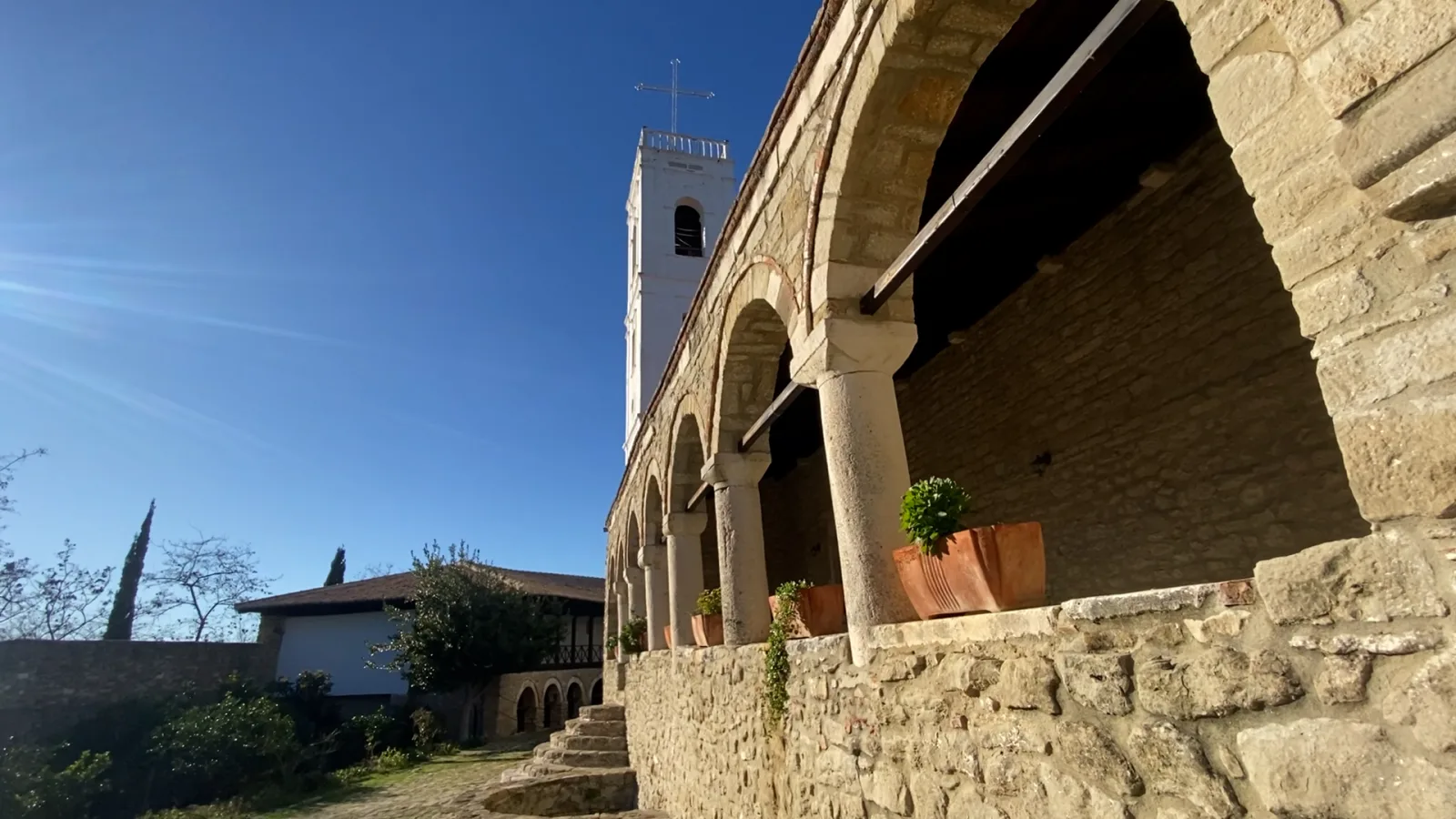
In 1925, during the stewardship of Llaz Bozo, the monastery’s bell tower was constructed, becoming one of the defining features of its silhouette. Due to the lack of natural water sources on the hilltop, the monastery relied on an ingenious system of cisterns for collecting and storing rainwater. Four of these cisterns survive today, providing valuable insight into the daily life and infrastructure of the monastic community.
The Monastery of the Nativity of the Virgin Mary occupies an area of approximately 2,500 square meters. Historically, it owned extensive agricultural lands, pastures, meadows, woodlands, and more than one thousand olive trees, providing the economic foundation necessary for the monastery’s maintenance and activities.
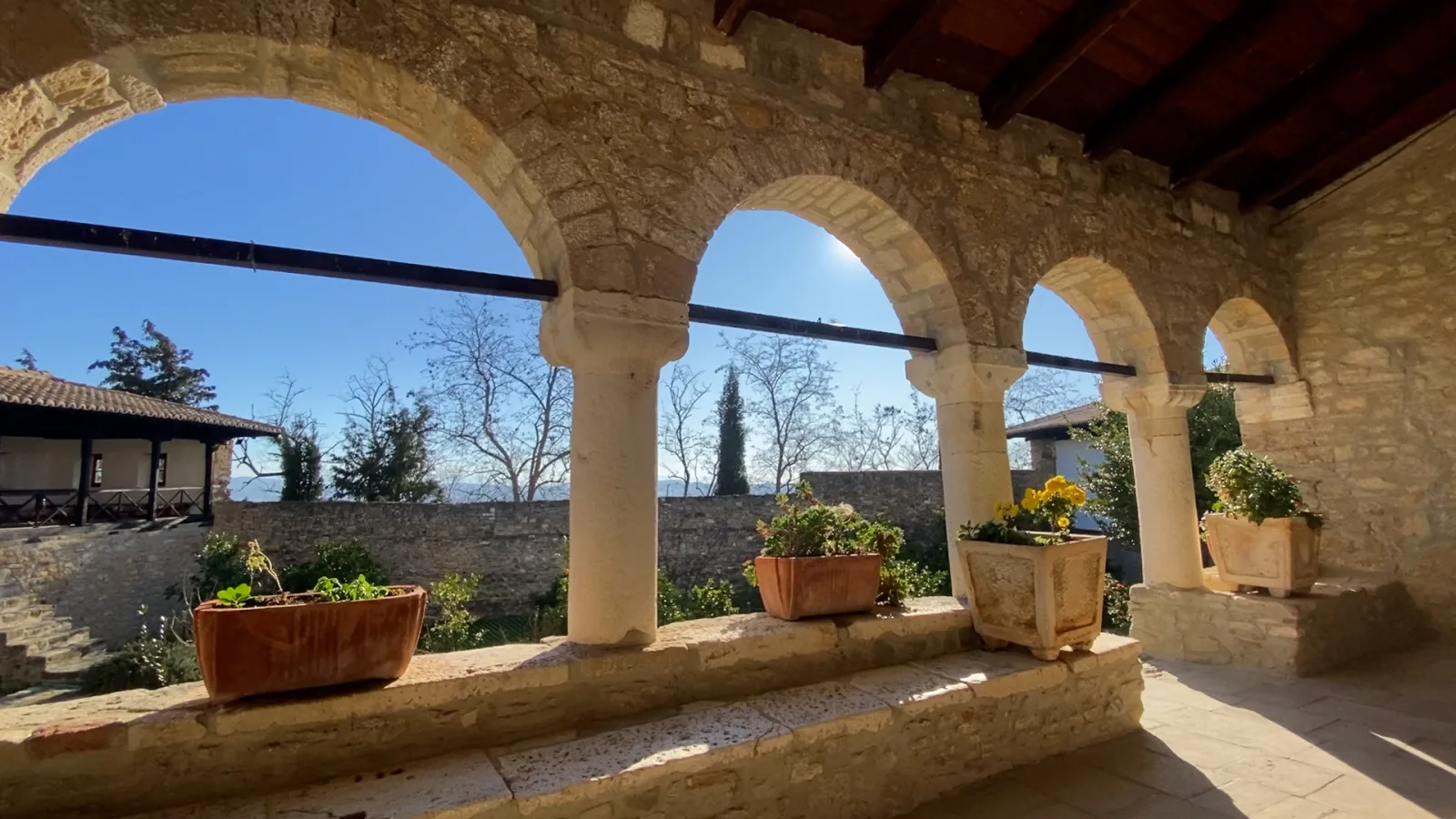
Another significant architectural feature is the church’s monumental portico, completed in February 1754, as confirmed by an inscription carved above the first arch of the western colonnade.
Today, the Monastery of Ardenica remains one of Albania’s most treasured cultural and religious landmarks. Beyond its remarkable architecture, frescoes, and historical inscriptions, it is closely connected to Albanian national history. According to tradition, it was here that the marriage of Albania’s National Hero, Gjergj Kastrioti Skanderbeg, and Donika Arianiti received its blessing. In recent years, the commemoration of their wedding has been revived as a local cultural celebration, further strengthening Ardenica’s role as a place where Albania’s religious heritage and national memory come together.
Gallery